
Coconut oil has become a widespread cooking ingredient which food companies promote as a superfood. Clinical research shows that coconut oil consumption negatively affects our heart and metabolic systems. The field of Lifestyle Medicine depends on understanding how different fats affect human biology through its core element of plant-based whole-food eating.
The following research shows evidence about coconut oil and its relation to cholesterol levels while showing why people misunderstand its healthiness.
1. Acute Effects: How Quickly Does Coconut Oil Impact Cholesterol?
The research shows that our dietary choices result in direct biological effects. The consumption of one slice of coconut-oil cake leads to an immediate increase in blood cholesterol levels. The acute cholesterol spike does not occur with flaxseed oil cakes which contain heart-healthy omega-3 fatty acids.
2. Cardiovascular Health and LDL (Bad) Cholesterol
Researchers conducted a month-long randomized controlled crossover study to test how daily consumption of two tablespoons of virgin coconut oil affects participants. Coconut oil consumption led to a 14% cholesterol increase in study participants compared to the control group which consumed safflower oil. Atherosclerotic cardiovascular disease develops because of elevated levels of LDL (low-density lipoprotein) cholesterol. The medical field of Lifestyle Medicine uses these markers to protect patients from heart disease which stands as the primary cause of death worldwide.
3. The MCT Misconception: Lauric and Myristic Acids
coconut oil contains saturated fat which primarily consists of medium-chain triglycerides but scientific research shows that this fat type has different metabolic pathways than long-chain fats. The main components of coconut oil are lauric acid and myristic acid.
These specific saturated fats have potent LDL-raising effects. The research indicates that people who want to reduce their heart disease risk through sustained vascular health maintenance should not use coconut oil but instead choose healthier fat alternatives
4. Metabolic Health: Beyond Cholesterol
The study found that insulin resistance worsened for participants even after they established a healthier pattern through positive activities which included:
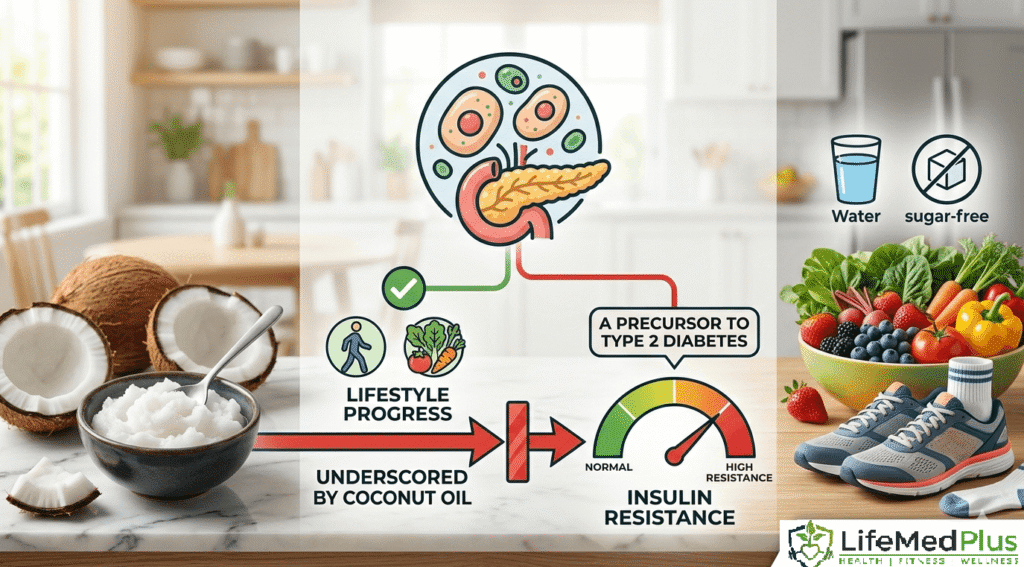
- Increasing intake of fruits and vegetables.
- Reducing sugars and animal fats.
- Engaging in regular physical activity (like walking).
The research indicates that exercise along with stress management techniques remains crucial for maintaining good health. However, our choice of dietary fats can disrupt the progress we make toward achieving metabolic health.
5. What About Coconut Milk?
The natural properties of coconut milk would make it an ideal selection yet scientific research indicates that coconut milk causes severe damage to arterial function. Researchers discovered that the substance operates like a fast-food sausage and egg muffin which causes arterial damage.
Our bodies respond to both meat and coconut milk because arterial pathways in our body experience a process called “clamping down.” Coconut milk consumption does not affect cholesterol levels in the same manner as concentrated oil yet people who drink it three times or more each week face higher chances of developing:
- Vascular disease
- Stroke
- Heart attack
Healthier Alternatives For better vascular health people should switch to these alternatives:
- Soy milk
- Oat milk
- Other unsweetened nut milks (e.g., almond or cashew)
Watch and Learn More
For a deeper dive into the science of coconuts and health, view these informative videos:
- Coconut Oil and Abdominal Fat
- Coconut Oil and the Boost in HDL “Good” Cholesterol
- What About Coconuts, Coconut Milk, and Coconut Oil MCTs?
References and Scientific Data
- PMIDs: 21736782, 28277823, 26699442, 19437058, 11603133, 24282632, 27650783, 26946252, 28254181
- DOI: doi.org/10.18051/UnivMed.2015.v34.149-158