
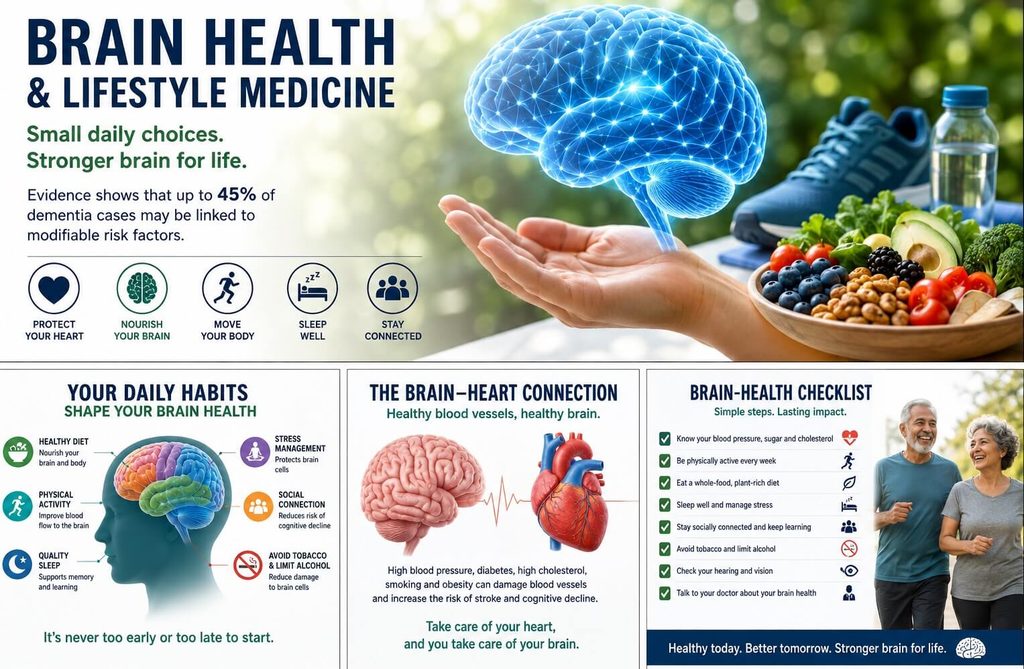
Your brain health is closely connected to the way you live. The same lifestyle factors that protect your heart and blood vessels can also help protect cognitive health and reduce the risk of dementia.
Brain health should not begin when memory problems appear. It is a lifelong process influenced by physical activity, nutrition, sleep, stress, social connection, vascular health and other modifiable risk factors.
Brain Health Begins Long Before Dementia
Dementia is not something that must happen as we age. The World Health Organization and the 2024 Lancet Commission both note that several risks can be changed. These include high blood pressure, diabetes, low activity, smoking, alcohol misuse, obesity, and problems with hearing or vision. Social isolation also matters. So does having high LDL cholesterol.
In the 2024 Lancet Commission report, researchers pointed to 14 risk factors that might be altered. They also estimated that dealing with these factors could help prevent or delay about 45% of dementia cases at the population level.
That number is not a promise for one person. It is a broad estimate for groups, not a direct rule for your own outcome. Still, the takeaway is clear: You can protect brain health during life.
Protect Your Heart to Protect Your Brain
Your brain needs steady blood flow. Problems like high blood pressure, diabetes, high cholesterol, smoking, and other vascular risks can harm blood vessels. This can raise the chance of stroke and also affect thinking.
So, taking care of heart risk is part of preventing brain decline. Check your blood pressure, blood sugar, and cholesterol. If you have high blood pressure, diabetes, or dyslipidemia, work on it with diet, exercise, and other lifestyle steps. Use medicines too if a clinician says you should.
Move Your Body
Staying active helps more than just your muscles. It also supports your heart and your brain. When you exercise, your heart works more efficiently. Your blood pressure may improve. Your body can use insulin better. Many people feel better too, and daily movement often gets easier. Exercise also backs up brain function that helps learning and change.
Most adults can follow this plan from WHO: Aim for 150 to 300 minutes each week of moderate activity. Or aim for 75 to 150 minutes of vigorous activity. Also add strength work on at least two days in the week.
You do not need to train like a pro. Try walking, biking, swimming, dancing, gardening, or other active play. If you do it often, it counts.
Pick a routine you can begin now. Make it something you can keep doing.
Eat for Your Whole Body—and Your Brain
There is not one single food that has been proven to stop dementia. The best results come from eating patterns that are healthy overall.

A Mediterranean style plan, or a plant focused way of eating, can feature vegetables, fruit, beans, whole grains, nuts, and seeds. It also includes fats from sources that are usually unsaturated. At the same time, it helps to cut back on foods that are highly processed, added sugars, processed meats, and foods heavy in saturated fat.
People often talk about the MIND diet. Observational work has linked it with better thinking and memory outcomes. But a randomized study in the New England Journal of Medicine tested a MIND diet plan for three years and did not see a meaningful slowdown in cognitive decline versus a control diet.
So the main point is this: Pick a healthy eating pattern, not a “miracle” food or a “miracle” diet.
Sleep Is Brain Health
Sleep helps with memory and mood. It also keeps regular brain function working as it should.
If sleep is not restful for weeks, or if you feel very sleepy during the day, it may point to a disorder. Loud snoring can be a sign. So can breathing pauses that someone else notices while you sleep. A doctor should evaluate these issues.
You can support better sleep by going to bed and waking up around the same times. Make your bedroom more comfortable for resting. If problems continue, get help from a professional.
Keep Your Brain Active and Connected
Your brain can change as you go through life. This is often called neuroplasticity.
You can support that change by learning new skills. Reading can help too. Making things, moving your body, and trying fresh activities also give your brain extra work. Still, it is not smart to sell neuroplasticity as a cure. People sometimes talk as if it can fully “rewire” the brain or undo neurodegenerative illness. That is an overreach.
It also helps to be with other people. Strong ties with family and friends matter. Community events can count. Volunteering may help as well. Shared hobbies give you regular contact too. These kinds of links support mood and mental health. They can also lower the chance of loneliness. Social isolation is linked to higher dementia risk, and that risk can be changed.
Brain health depends on more than thoughts inside your head. It is shaped by your daily life and the world around you.
Don’t Skip Hearing and Vision
People do not always talk about hearing and sight when they discuss dementia risk.
Yet poor hearing and weak vision can often be changed. When you get regular hearing checks and eye exams, and then use the right care, it can be easier to stay connected. It may also help you keep daily routines, independence, and interest in what is going on around you.
Cut Out Tobacco. Keep Alcohol in Check
Smoking harms blood vessels. It also raises the chance of heart and stroke problems, including risks linked to the brain.
Quitting tobacco is one of the best steps you can take for your future health. Heavy alcohol use is also a risk factor that can be adjusted. It is linked to dementia and other illnesses. If you do not drink, you do not need to start for health reasons.
What Can Healthcare Professionals Do?
Brain health can become part of routine preventive care. During consultations, clinicians can consider:
- Blood pressure, glucose and cholesterol
- Physical activity
- Dietary patterns
- Sleep quality and sleep disorders
- Tobacco and alcohol use
- Mental health and social isolation
- Hearing and vision
- Cognitive concerns and functional changes
The strength of lifestyle medicine is that one intervention can benefit multiple systems at once.
Increasing physical activity can improve blood pressure, metabolic health, mood and physical function. A healthier diet can support cardiovascular and metabolic health. Smoking cessation benefits virtually every major organ system.
Brain Health Is a Lifelong Strategy
When you are young, start with good routines. In middle age, it matters even more to manage blood pressure and cholesterol. It also helps to keep diabetes and weight in check, along with other health issues. Later in life, staying active is key. So is keeping in touch with others and doing mentally challenging things. Sleep still matters a lot. Taking care of hearing and vision can also help you stay steady and independent.
There is no quick fix. No pill, no supplement, and no special food can stand in for the basics. Brain health grows from small steps. You repeat them again and again for years.
Your Brain Health Checklist
Ask yourself:
❤️ Is my blood pressure controlled?
🩸 Are my blood glucose and cholesterol healthy?
🚶 Am I physically active every week?
🥗 Do I regularly eat vegetables, fruits, legumes, whole grains, nuts and seeds?
😴 Am I getting adequate, good-quality sleep?
🚭 Do I use tobacco?
🧠 Do I keep learning and challenging my brain?
🤝 Do I maintain meaningful social connections?
👂 Have I addressed hearing problems?
👁️ Is my vision adequately assessed and treated?
You don’t have to change everything at once. Choose one healthy habit. Start today. Then build from there.
The LifemedPlus Message
Protect your heart. Move your body. Nourish your brain. Sleep well. Stay connected. Keep learning. And start before symptoms appear.
Brain health is not simply about adding years to life. It is about protecting the ability to think, remember, move, connect and remain independent for as long as possible.
References
- Livingston G, Huntley J, Liu KY, et al. Dementia prevention, intervention, and care: 2024 report of the Lancet standing Commission. The Lancet. 2024;404(10452):572–628. doi:10.1016/S0140-6736(24)01296-0.
- World Health Organization. Dementia. WHO Fact Sheet. Updated 2025.
- Barnes LL, Dhana A, Liu X, et al. Trial of the MIND Diet for Prevention of Cognitive Decline in Older Persons. New England Journal of Medicine. 2023;389:602–611. doi:10.1056/NEJMoa2302368.
- World Health Organization. WHO Guidelines on Physical Activity and Sedentary Behaviour. Geneva: WHO; 2020.
- World Health Organization. Physical Activity. WHO. Updated guidance and recommendations for adults and older adults.
- World Health Organization. Hypertension. WHO Fact Sheet. Updated 2025.
- World Health Organization. WHO Guidelines on Risk Reduction of Cognitive Decline and Dementia. Geneva: World Health Organization.
- World Health Organization. Deafness and hearing loss. WHO Fact Sheet.
- Global Wellness Institute – Lifestyle Medicine Initiative. The Future of Brain Health: Lifestyle Medicine, Vascular Vitality, and Neuroplasticity for Lifelong Clarity. 2025/2026.
- Centers for Disease Control and Prevention. Reducing Risk for Dementia. CDC; 2024.